Davs logo(615) 999-1110
services-5

What to Do After a Vehicle Breakdown on the Highway

A vehicle breakdown on the highway can be stressful and dangerous, but knowing the right steps to take can protect you, your passengers, and other drivers. At Dav's Towing, we respond to highway breakdowns every day and prioritize safety above all else. This guide outlines the essential actions to follow immediately after your vehicle breaks down on a highway or interstate.

1. Stay Calm and Prioritize Safety

The moment you notice trouble—whether it's unusual noises, loss of power, a flat tire, or warning lights—stay calm. Panicking can lead to sudden braking or swerving, which increases accident risk. Take deep breaths and focus on safely getting out of traffic.

2. Signal and Move to a Safe Location

  • Turn on your hazard lights (emergency flashers) immediately to alert other drivers.
  • Gently ease off the accelerator and use your vehicle's momentum to coast toward the right shoulder (or left shoulder on divided highways if the right isn't accessible).
  • Avoid slamming on the brakes or making abrupt movements. Signal your intentions early if changing lanes.
  • If possible, aim for an exit, rest area, or wide shoulder. Pull as far off the main roadway as you safely can—ideally far enough to open doors without stepping into traffic.
  • If you can't reach the shoulder and the vehicle stops in a travel lane, activate hazards and prepare to exit safely if needed (more on this below).

3. Secure the Vehicle

Once stopped:

  • Shift into park (or neutral for manuals) and set the emergency/parking brake.
  • Turn your wheels toward the guardrail or away from traffic to prevent rolling if rear-ended.
  • If it's dark or low visibility, turn on headlights and interior dome lights to make your vehicle more noticeable.

4. Make Yourself and Your Vehicle Visible

Highway speeds make breakdowns especially hazardous—other drivers may not see a stopped vehicle in time.

  • Leave hazard lights on at all times.
  • If you have them, place reflective triangles or flares behind your vehicle (at least 100-200 feet back, or farther on high-speed roads) to warn approaching traffic.
  • Raise your hood if safe to do so—this signals distress to other motorists.
  • Consider tying a bright cloth to your antenna or door handle for extra visibility.

5. Stay Inside the Vehicle When Possible

In most cases, especially on busy interstates, the safest place is inside your vehicle with your seatbelt fastened. Highways see high-speed traffic, and standing outside increases the risk of being struck.

  • Only exit if you feel your vehicle is at immediate risk of being hit (e.g., no shoulder and in a live lane).
  • If you must exit, do so from the passenger side (away from traffic), cross to a safe spot like behind a guardrail, and stay well off the roadway.
  • Never stand in front of or behind your vehicle, and avoid attempting repairs on a busy highway shoulder.

6. Call for Professional Help Immediately

Don't wait—call for roadside assistance right away while you're in a safe position.

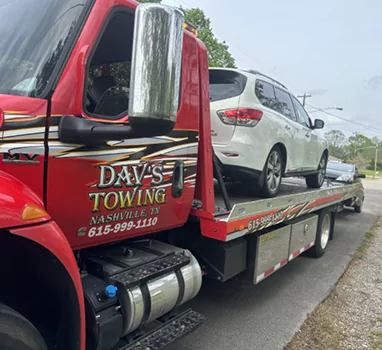
  • Use your phone to contact a reliable towing service like Dav's Towing. We're equipped to handle highway recoveries quickly and safely.
  • Provide clear details: your exact location (use mile markers, exits, nearby landmarks, or GPS coordinates), vehicle description, number of passengers, and nature of the issue.
  • If it's an emergency (e.g., fire, medical issue, or you're in the roadway), call 911 first.
  • If you have roadside assistance through insurance, an auto club (like AAA), or your vehicle manufacturer, use that service.

7. While Waiting for Help

  • Stay alert to your surroundings and keep your phone charged (a portable charger is a great addition to your emergency kit).
  • If you have passengers, keep everyone calm and inside if possible.
  • Avoid accepting help from strangers unless you're certain it's safe—professional responders are trained for these situations.

Prevention Tips for the Future

Breakdowns often catch us off guard, but preparation helps:

  • Keep an emergency kit in your trunk: reflective triangles/flares, flashlight, first-aid supplies, blanket, water, snacks, phone charger, and basic tools.
  • Maintain your vehicle regularly—check tires, fluids, belts, and battery.
  • Know your roadside assistance options before trouble strikes.

Highway breakdowns are never convenient, but following these steps dramatically reduces risks. At Dav's Towing, our team is available 24/7 to get you and your vehicle to safety quickly and professionally. If you're stranded, give us a call—we're here to turn a bad day around.

Looking to upgrade your office? Office Furniture Professionals supplies ergonomic, functional, and modern office furniture solutions that help businesses create productive, comfortable, and efficient work environments.

GET A QUOTE
who-we-are
Why choose us
Call us for the best moving experience.
Mask group
Trusted & Professional
Satisfaction Guaranteed
Flexible Payment Options
Friendly Support
Testimonials
What Our Customers Say
Frequently Asked Questions
We proudly serve Nashville and the surrounding areas, including Hendersonville, Madison, Antioch, and more. If you're unsure, just give us a call!
Yes! Dav’s Towing & Recovery operates 24 hours a day, 7 days a week. Whether it’s midnight or rush hour, we’re here to help.
Response times vary by location and traffic, but we always aim to arrive as fast as possible—often within 30 minutes in the Nashville area.
We can handle cars, trucks, SUVs, motorcycles, and some light commercial vehicles. If it fits on our truck, we can tow it.
No problem. We offer roadside services like jump starts, lockouts, fuel delivery, and recovery for stuck vehicles.
who-we-are
Davs logo

Serving Nashville with fast, reliable towing and roadside assistance. Call us 24/7 at 615-999-1110.

Links
Menu
Service Areas
Menu

Copyright © 2025 Dav's Towing & Recovery. | All Rights Reserved

chevron-down